DOJ Title II Web Rule Deadlines: What April 2027 Really Means
You may have heard that a big ADA website deadline is coming in April 2027, and that it will lead to more businesses being sued. Part of that is true, and part of it gets stretched. This post explains what the rule actually says, who it covers, the dates as they stand today, and what it realistically means for a private small business.
The short version
- In April 2024, the Department of Justice (DOJ) published a rule under Title II of the ADA. Title II covers state and local governments, not private businesses.
- The rule requires government websites and mobile apps to meet WCAG 2.1 Level AA.
- On April 20, 2026, DOJ pushed both deadlines back by one year. Larger governments now have until April 26, 2027, and smaller ones until April 26, 2028.
- There's still no matching federal rule for private businesses under Title III. Those businesses can already be sued today, and that doesn't depend on any 2027 date.
Who Title II covers
Title II applies to "public entities." That means states, counties, cities, towns, public school districts, public colleges and universities, transit agencies, courts, public libraries and special districts like water or park districts. If you run a restaurant, salon, contractor business or online store, Title II isn't about you directly. Your website obligations come from Title III, which we'll get to below.
The dates, as they stand now
The original 2024 rule gave governments two or three years depending on size. The April 2026 interim final rule moved each date back one year:
| Who | Original date | Current date |
|---|---|---|
| Governments serving 50,000 or more people | April 24, 2026 | April 26, 2027 |
| Governments serving fewer than 50,000 people, and special districts | April 26, 2027 | April 26, 2028 |
So if you heard "April 2027 is for small towns," that was correct under the original rule. Today April 2027 is the date for larger governments, and small towns have until 2028. DOJ took comments on the extension through June 2026, so it's worth checking ADA.gov for any further change.
What WCAG 2.1 AA means in practice
WCAG is a set of testable guidelines published by the World Wide Web Consortium. Level AA is the middle level that most laws and settlements reference. In everyday terms, it asks for things like:
- Text alternatives for meaningful images
- Captions for prerecorded video
- Enough color contrast between text and background
- Everything usable with a keyboard, with a visible focus indicator
- Clear headings, labels and error messages on forms
- Pages that still work when text is enlarged or the screen is narrow
The rule has some exceptions, such as archived content, older documents that nobody needs to use, and content posted by unrelated third parties. Governments can also claim undue burden in limited cases.
A related deadline: HHS and healthcare
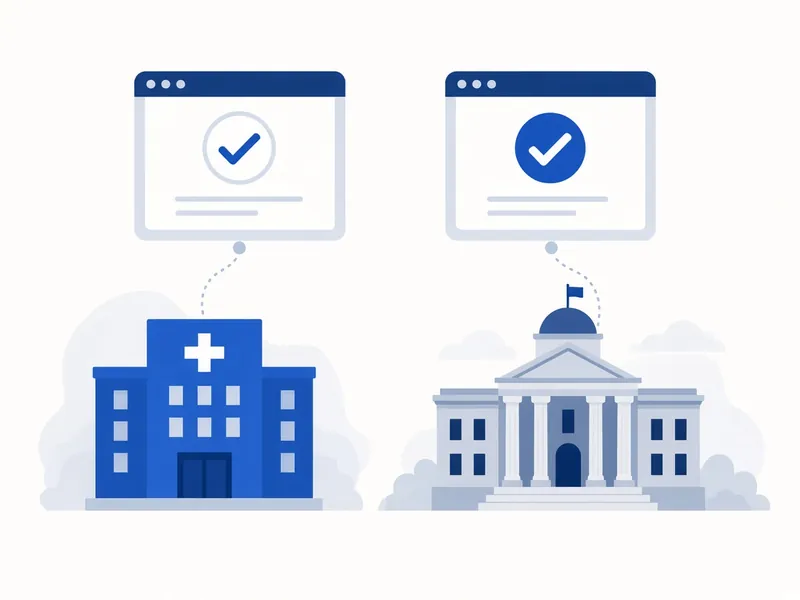
Separately, the Department of Health and Human Services issued a rule under Section 504 of the Rehabilitation Act for organizations that receive HHS funding, such as many hospitals, clinics and health centers. In May 2026, HHS also extended its dates by a year: May 11, 2027 for recipients with 15 or more employees and May 10, 2028 for smaller ones. It uses the same WCAG 2.1 AA standard. If your business takes Medicare, Medicaid or other HHS funding, ask your advisor whether this applies to you.
What this means for private businesses
Here's where claims often get overstated. The Title II rule doesn't create new duties for private businesses, and no federal regulation sets a website standard for them. DOJ withdrew its earlier Title III web rulemaking in 2017 and has listed it as inactive since.
That doesn't mean private businesses are off the hook. Title III already applies to businesses that serve the public, and thousands of website lawsuits are filed under it every year (see ADA website lawsuits in plain numbers). What the government rules do is make WCAG 2.1 AA an even more familiar benchmark. When a city, a hospital and a school district all follow the same standard, it becomes the natural yardstick in private disputes too.
Will there be a surge of lawsuits against private businesses in April 2027? No one can say for sure, and we haven't seen a reliable source predicting one tied to that date. The honest view is that private-business filings follow their own trend, which rose in 2025, and are driven by state damages laws and plaintiff firms more than by government deadlines.
Who is affected, at a glance
| Organization | Rule | Date |
|---|---|---|
| City, county or state agency serving 50,000+ people | DOJ Title II | April 26, 2027 |
| Small town, small county or special district | DOJ Title II | April 26, 2028 |
| Hospital or clinic with HHS funding and 15+ employees | HHS Section 504 | May 11, 2027 |
| HHS-funded organization with fewer than 15 employees | HHS Section 504 | May 10, 2028 |
| Private business (shop, restaurant, contractor, online store) | ADA Title III, no specific web regulation | No set date; claims are possible now |
Examples
A county parks department that serves 120,000 residents runs an online reservation system for picnic shelters. Under the current rule, that system should meet WCAG 2.1 AA by April 26, 2027, including the third-party booking tool it pays for.
A village of 8,000 people posts council agendas as scanned PDFs. It has until April 26, 2028, but new documents it posts after that date, and any older documents people still need to use, should be accessible.
A private dental office isn't covered by Title II at all. If it receives HHS funding, the Section 504 rule may apply. Either way, its website can already be the subject of a Title III claim.
A business opportunity worth noting
If you sell to local governments, schools or hospitals, the deadlines matter to you indirectly. The rules cover content they provide "through contractual, licensing, or other arrangements," so vendors that supply booking systems, payment portals, forms or apps may be asked to show their products meet WCAG 2.1 AA.
What to do now
- Don't wait for a date. Private business websites are judged by today's expectations.
- Use WCAG 2.1 AA as your target, and WCAG 2.2 if you can.
- Scan your key pages, fix what you find and check again on a schedule.
- If you're a government contractor or HHS-funded, review your contracts and talk to your advisor.
Frequently asked questions
Is April 2027 the deadline for small towns?
Not anymore. Under the April 2026 extension, April 26, 2027 applies to governments serving 50,000 or more people. Smaller governments and special districts have until April 26, 2028.
Does the Title II rule apply to my private business?
No. It applies to state and local governments. Private businesses fall under Title III, which has no specific web regulation but can still lead to lawsuits.
What standard do these rules use?
WCAG 2.1 Level AA, a set of testable guidelines from the World Wide Web Consortium.
Could the dates change again?
Possibly. DOJ took public comments on the extension through June 2026, so check ADA.gov for the latest.
Comparing tools? See our accessibility widget comparison.
Sources
- ADA.gov fact sheet: web rule for state and local governments
- Federal Register: DOJ extension of web rule deadlines (April 20, 2026)
- SBA Office of Advocacy summary
- HHS press release: Section 504 extension (May 7, 2026)
- Duane Morris: HHS extends Section 504 web deadlines
- American Bar Association: Digital accessibility under Title III
Disclaimer: This article is general information, not legal advice. Laws and dates can change. A toolbar alone doesn't make a website conform; we help reduce risk and improve access.