ADA Website Lawsuits in Plain Numbers (2025 Data)

If you own a small business, you've probably heard a story about a shop owner who opened the mail and found a letter saying their website shut out people with disabilities. Stories like that travel fast, and they tend to grow in the retelling. This post skips the drama and looks at what the public data actually says, so you can make a calm, informed decision about your own site.
Why these lawsuits exist at all
Title III of the Americans with Disabilities Act requires businesses that serve the public to give people with disabilities equal access to their goods and services. The law was written in 1990, before most businesses had a website, so it doesn't spell out website rules. Over the past decade, courts and the Justice Department have increasingly treated a business website as part of how that business serves the public. When a blind person using a screen reader can't complete a purchase, or a keyboard-only user can't book an appointment, that can become the basis of a claim.
There's still no federal regulation that sets a technical website standard for private businesses. In practice, the Web Content Accessibility Guidelines (WCAG), usually version 2.1 or 2.2 at Level AA, are the yardstick that plaintiffs, settlements and courts point to most often.
How many cases were filed in 2025?
Different trackers count different things, which is why you'll see different totals. Here's what three of the most cited sources reported for 2025:
- Seyfarth Shaw, a law firm that has tracked ADA filings for over a decade, counted 3,117 website accessibility lawsuits in federal court, up 27% from 2,452 in 2024.
- EcomBack, which counts federal and state cases, reported 3,948 website accessibility lawsuits, up about 24% from 3,188 the year before.
- UsableNet, which also includes state courts in New York and California plus app and video cases, reported 4,928 digital accessibility lawsuits.
The honest summary: somewhere between about 3,000 and 5,000 lawsuits a year, depending on what you count, and the number rose in 2025 after two flatter years. For context, Seyfarth counted 8,667 ADA Title III lawsuits of all kinds in federal court in 2025, so websites are a large share, but physical access cases (ramps, parking, restrooms) still make up the majority.
Lawsuits are only part of the picture
Many claims never become lawsuits. They start and end with a demand letter that asks the business to fix its site and pay a settlement. Nobody publishes a reliable count of these letters, so be skeptical of anyone who quotes a precise number. What we can say is that the filed cases are the visible part, and private letters add to it.
Where cases are filed
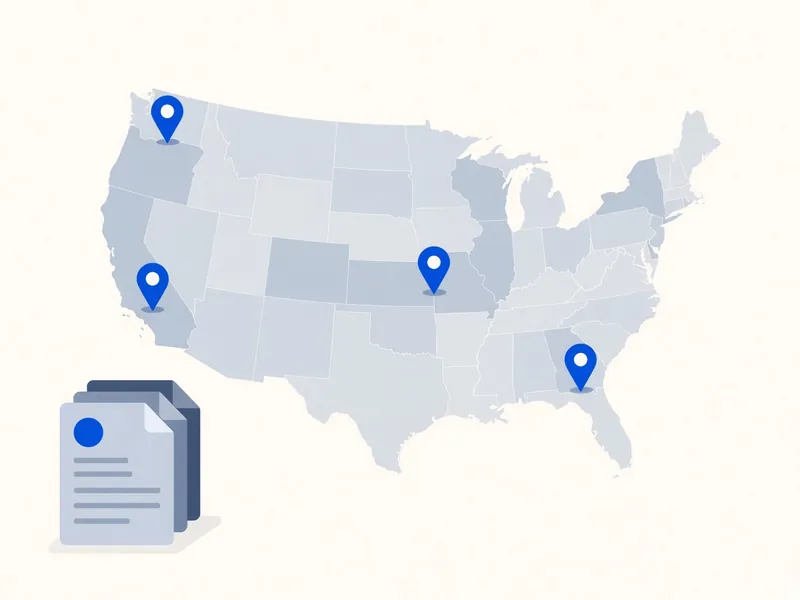
A handful of states account for most filings, mainly because some state laws allow money damages that the federal ADA doesn't.
- In Seyfarth's federal count, New York led with 1,021 cases, Florida followed with 961 (nearly double its 2024 total), and Illinois was third with 585.
- EcomBack's count, which includes state courts, showed New York at 1,108, Florida at 950, California at 787 and Illinois at 576. Those four states made up about 87% of its total.
- California filings mostly happen in state court now, which is why its federal number looks tiny.
An important detail: you don't need an office in New York or Florida to be sued there. UsableNet notes that courts have accepted cases against businesses whose sites are simply available to residents of those states.
Who gets named?
It's not only big brands. UsableNet found that 64% of 2025 digital accessibility lawsuits named companies with under $25 million in annual revenue. At the same time, larger retailers are being named more often: about 36% of the top 500 online retailers received at least one lawsuit in 2025.
EcomBack also tracks repeat defendants and reported that a meaningful share of cases named businesses that had already been sued before. Fixing a site once and then letting it drift is a common pattern behind repeat claims.
Do accessibility widgets stop lawsuits?
No, and the data is fairly clear on this. EcomBack counted 983 lawsuits in 2025 against sites that already had an accessibility widget installed, about 25% of all cases. A toolbar gives visitors useful options, but it doesn't fix missing form labels, broken checkout buttons or images without descriptions in the site's own code. We cover this in more detail in Can a widget alone make a site accessible?
Why so many sites have problems
WebAIM's yearly scan of the top one million home pages finds detectable accessibility errors on roughly 95% of them, with an average of dozens of errors per page. The most common problems are low-contrast text, images without alternative text, empty links and buttons, and form fields without labels. None of these are exotic. Most come from templates, page builders and plugins that were never tested with assistive technology.
Two everyday examples
A neighborhood bakery takes online pre-orders through a template site. The "Add to cart" button is an icon with no text label, so a screen reader announces only "button." The fix takes a few minutes in the theme settings, but until it's done, a blind customer can't order.
A home services contractor has a quote form where the fields use gray placeholder text instead of labels. When the form shows an error, it turns the field red with no message. Adding visible labels and a written error message fixes both problems for every visitor, not just people using assistive technology.
Neither business did anything unusual. That's the point: most claims grow out of common, fixable patterns.
The numbers at a glance
| Source | What it counts | 2025 total |
|---|---|---|
| Seyfarth Shaw | Federal court website cases | 3,117 |
| EcomBack | Federal and state website cases | 3,948 |
| UsableNet | Federal plus New York and California state courts, including apps and video | 4,928 |
What a calm response looks like
The numbers are real, but they aren't a reason to panic. They're a reason to put accessibility on your normal maintenance list, the same way you keep your SSL certificate current. A sensible plan for a small business looks like this:
- Find out where you stand. Run an automated scan of your key pages. It won't catch everything, but it shows the common issues quickly.
- Fix the high-impact items first. Contrast, alt text, form labels, headings and keyboard access cover a large share of real barriers. See our 10 quick fixes.
- Test the paths that matter. Can someone using only a keyboard book, buy or contact you?
- Keep it up. New pages and plugins bring problems back. Rescan on a schedule.
- Publish an accessibility statement with a way for visitors to report problems, and respond when they do.
- If you receive a letter, don't ignore it. Start fixing the issues it describes and keep a record of your progress.
The bottom line
Thousands of businesses are named in website accessibility lawsuits each year, most of them small, and most of the underlying problems are fixable. The best thing you can do is treat accessibility as ongoing care for your website. It reduces risk, and it opens your business to more customers at the same time.
Frequently asked questions
How many ADA website lawsuits are filed each year?
Recent trackers counted roughly 3,100 to 4,900 in 2025, depending on whether state courts, apps and video cases are included.
Are small businesses really sued?
Yes. UsableNet found that about 64% of 2025 digital accessibility lawsuits named companies with under $25 million in yearly revenue.
Can I be sued in a state where I have no office?
It happens. Courts in states like New York have accepted cases against businesses whose websites are available to their residents.
What should I do if I get a demand letter?
Don't ignore it. Start fixing the issues it describes and document your progress.
Comparing tools? See our accessibility widget comparison.
Sources
- Seyfarth Shaw: Federal website accessibility filings in 2025
- Seyfarth Shaw: ADA Title III federal filings 2025
- EcomBack 2025 annual ADA website lawsuit report
- UsableNet 2025 year-end digital accessibility lawsuit report (PDF)
- UsableNet lawsuit tracker
- WebAIM Million
Disclaimer: This article is general information, not legal advice. Laws and dates can change. A toolbar alone doesn't make a website conform; we help reduce risk and improve access.